
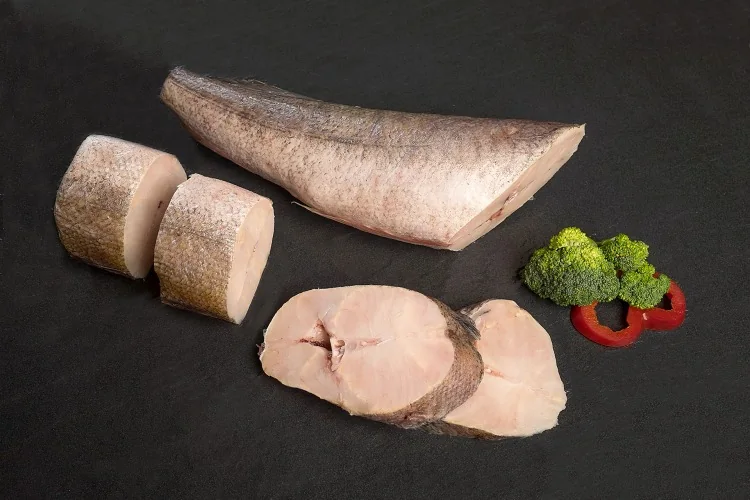
Hake is one of the most eaten whitefish in southern Europe. In Spain it is called merluza, in Portugal pescada and in France merlu or colin. In the UK it is often seen as an alternative to cod and haddock. This guide covers what hake is, how it tastes and how to cook it so it stays moist and keeps its shape.
What is hake fish?
Hake belongs to the genus Merluccius, a family of the same order as cod. The species you will meet most often are European hake (Merluccius merluccius), caught in the North-East Atlantic and the Mediterranean, and Argentine hake (Merluccius hubbsi) from the South-West Atlantic, which is widely sold frozen. Hake is a lean, white-fleshed fish with a long silver body and a large mouth.
What does hake taste like?
Hake has a mild, clean, slightly sweet flavour and soft white flesh that separates into large flakes. It is less firm than cod, which makes it pleasant to eat but more delicate to cook. Because the taste is gentle, hake works with simple seasoning: olive oil, garlic, lemon, parsley, or a green sauce.
Hake fillets, loins, steaks or whole?
- Hake fillets: the most practical cut for kitchens and the easiest for children, with few bones. Skin-on fillets hold together better when pan-fried.
- Loins: the thickest part of the fillet, ideal for restaurant portions.
- Steaks (cross-cut): traditional in Spain and Portugal for frying, baking and stews; the central bone helps the fish keep its shape.
- Whole hake: best for roasting or for chefs who want the head and bones for stock.
How to cook hake
Pan-fried hake fillet
Pat the fillet dry and season it. Heat a little oil in a non-stick pan, lay the fillet skin side down and cook for 3–4 minutes without moving it, then turn it and cook for 1–2 minutes more. Hake is ready when the flesh turns opaque and flakes easily.
Baked hake
Bake fillets or loins at 180–200 °C for about 10–15 minutes, depending on thickness, with olive oil, garlic and a splash of white wine. Steaks take a few minutes longer.
Hake in green sauce
The Basque classic merluza en salsa verde gently poaches hake in olive oil, garlic, parsley and a little fish stock. Moving the pan in circles helps the gelatine from the fish thicken the sauce.
Cooking frozen hake
Frozen hake fillets can be cooked straight from frozen in the oven, adding a few minutes to the cooking time. For pan-frying, thaw them slowly in the fridge first and dry them well, otherwise they release water and break. Never refreeze hake once it has thawed.
Buying hake wholesale
Gialmar supplies hake fresh and frozen, as whole fish, fillets, steaks and heads. European hake comes from Portuguese auctions; Argentine hake is supplied frozen for year-round availability. For food service, ask for a size grade and portion weight that matches your menu. You might also like our guides to monkfish and sea bream versus sea bass.
Frequently asked questions
Is hake a good fish to eat?
Yes. Hake is a lean white fish with mild flavour, few bones in the fillet and a high protein content, which makes it popular with families and in school meals.
Is hake the same as cod?
No. Both belong to the same order of fish, but hake is a different family. Its flesh is softer and more delicate than cod.
How do I stop hake falling apart?
Cook it skin side down, keep the heat moderate, turn it only once and avoid overcooking. Thick loins and steaks are easier to handle than thin fillets.
Related guides
- Monkfish guide: what it tastes like and how to cook monkfish tail
- Sea bream vs sea bass: differences, taste and how to cook them
- Frozen squid and octopus: how to buy, thaw and cook them
- IFS Food certified seafood suppliers: what buyers should check
- Buying fish at Portugal's fishing ports
- MSC fish: what MSC certification means and how chain of custody works